Architecture & Operational Overview
Operating multi-camera or high-volume commercial photo productions creates substantial bottlenecks when multiple crew members attempt to interact with an active Capture One session simultaneously. Direct file locking mechanisms inside SQLite session databases prevent concurrent write operations, which can quickly corrupt .cosessiondb catalog indexes if multiple machines access the same root directory without an isolated sync topology.
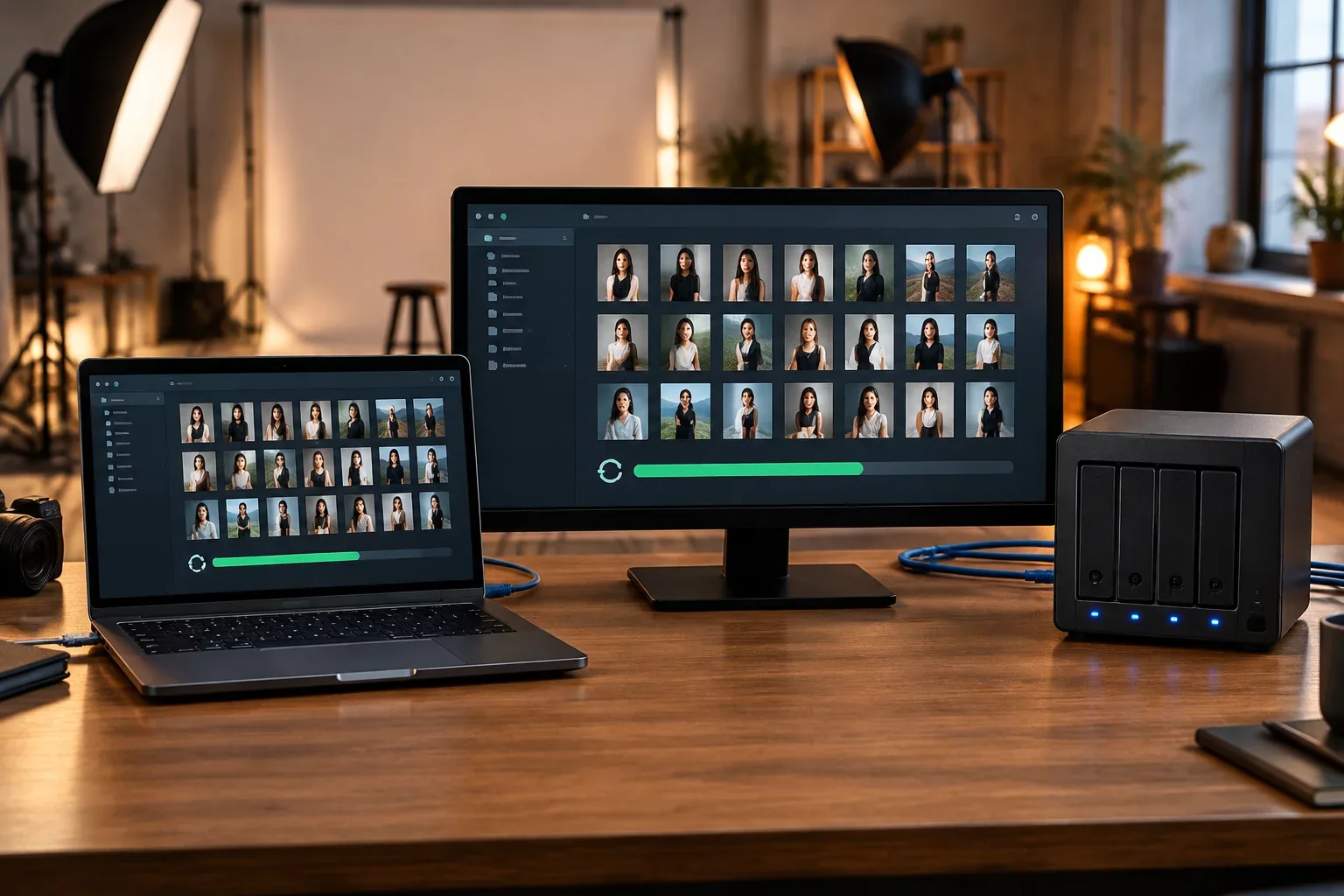
A dedicated multi-user local network session sync architecture resolves this conflict by separating the primary capture ingest machine from client review terminals and digital asset management exports. Tethered captures stream directly onto an ultra-fast local NVMe scratch volume before an automated background daemon mirrors verified RAW files and companion adjustments across dedicated 10GbE network shares.
Request Studio Workflow Checklist
Get the complete verified routing step map, terminal naming tokens, and validation matrix.
Execution Benchmarks & Checkpoints
Maintaining continuous network coherence demands strict verification checkpoints at every phase of file propagation, ensuring metadata writes remain non-destructive and fully atomic.
- Verify SMB 3.1.1 multichannel or NFS v4.2 mount protocols with packet signing overhead disabled exclusively on isolated studio subnets.
- Enforce unidirectional write privileges: only the primary digital tech machine commits new EIP or RAW assets to the active capture subfolder.
- Deploy automated file-watcher services (FSEvents/inotify) to push read-only proxy previews to art director iPads and secondary grading displays within 200ms.
- Execute periodic SHA-256 checksum validations between local capture cache and studio backup array without interrupting live tethering.
Failover & Redundancy Path
When network switch packet drops or unexpected cable disconnects sever client workstations from the main server, the failover protocol automatically transitions secondary nodes to read-only cached smart previews. The primary capture station continues uninterrupted tethered recording to its internal NVMe storage, buffering outgoing sync queues until network handshake verification confirms full 10GbE bandwidth restoration.
Multi-user session stability on set is never about raw bandwidth alone; it hinges on strict separation between the write-locked capture pipe and distributed read-only review channels.
— Digital Operations Manual, Commercial Studio Standards