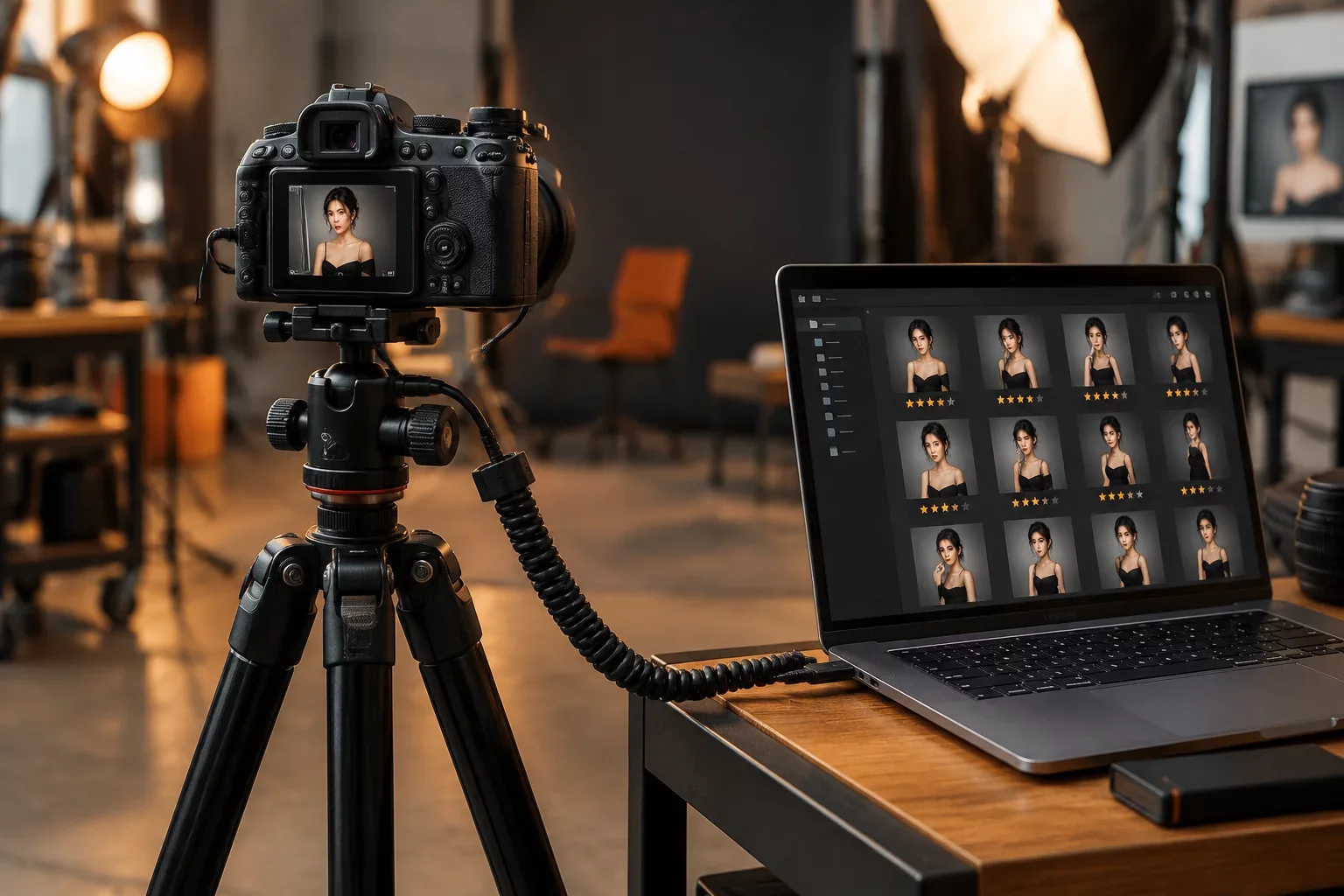
Architecture & Operational Overview
The 2026 Camstrap Digital Workflow Report delivers a quantitative examination of asset movement bottlenecks across seventy-two high-output commercial studios. Evaluating over two million captured RAW frames across fashion, automotive, and e-commerce sets, the study highlights how high-resolution medium format and 60-plus megapixel mirrorless sensors have stretched conventional tethering pipelines to their operational limits.
Digital techs and studio managers reported that physical port failures and intermittent packet loss accounted for sixty-four percent of all on-set technical interruptions. In response to these findings, the report outlines rigorous benchmarks for cable strain relief, dual-bus host controller distribution, and local network tethering proxies that isolate primary ingest from creative review screens.
Request Studio Workflow Checklist
Get the complete verified routing step map, terminal naming tokens, and validation matrix.
Execution Benchmarks & Checkpoints
To eliminate on-set data starvation and ensure real-time review parity, the report outlines four essential operational checkpoints:
- Mechanical Port Clamping: Secure camera and host cable interfaces using dedicated aluminum cage brackets rated for at least 15 pounds of sudden pull force without connector wobble.
- Bus Isolation Architecture: Route active tethering streams exclusively through dedicated host PCIe controller lanes, strictly separated from high-bandwidth external NVMe scratch drives.
- Sub-Second Proxy Rendering: Configure Capture One preview engines to generate color-managed 2560px proxies within 500 milliseconds of ingestion to avoid review screen stall.
- Real-Time Parity Mirroring: Maintain automated script-based background duplication to secondary solid-state media before releasing capture cards or clearing memory buffers.
Failover & Redundancy Path
When tether line integrity registers packet loss or falls below 350 MB/s, the workstation must trigger non-blocking buffer queuing. Rather than stalling shutter release on camera bodies, incoming shots buffer to high-speed internal CFexpress cards until the digital technician verifies physical connectivity, ensuring zero lost frames during critical creative takes.
Reliability in commercial image workflows is no longer determined solely by software algorithms, but by mechanical discipline at the physical ports and intelligent data routing.
— Chloe Moreau, Lead Digital Technician & Workflow Strategist